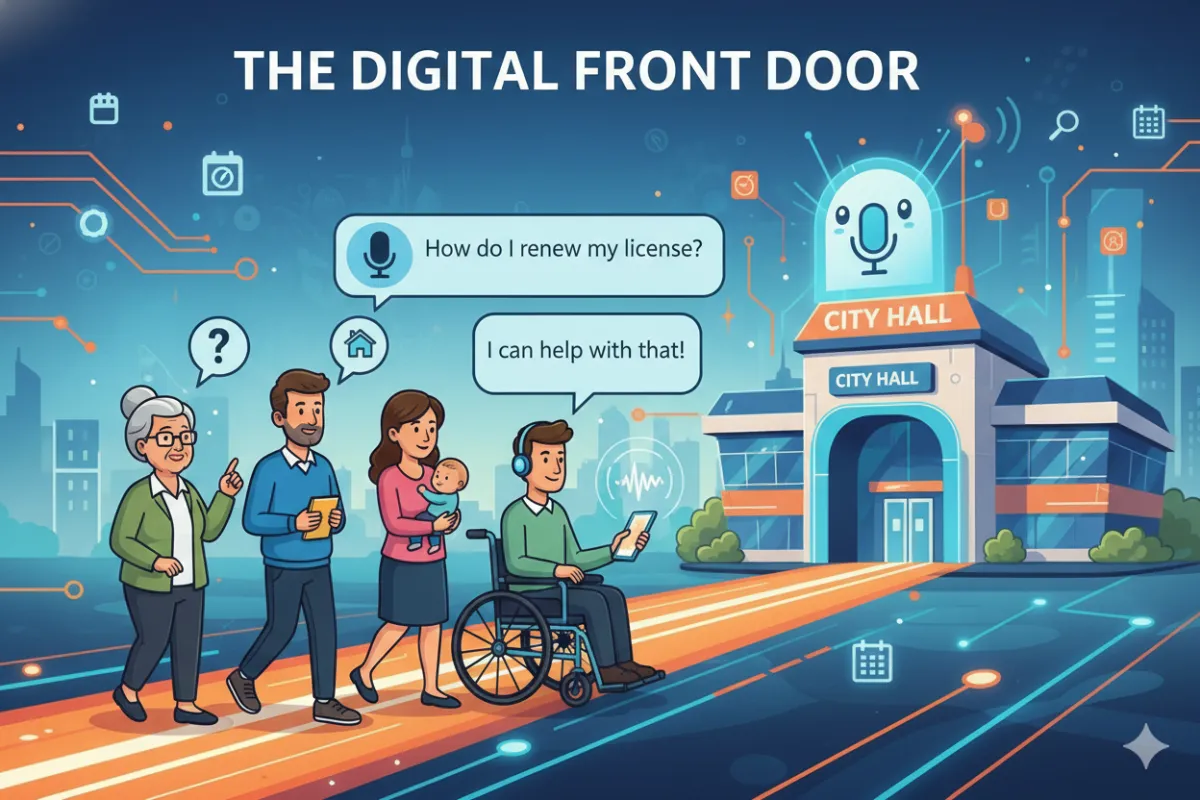
Why Voice AI is the New Language of Local Government
The way residents interact with their local government is changing. For years, the "Digital Front Door" was a complex website or a confusing 311 menu. But residents don't think in terms of "Departments;" they think in terms of questions: “When is my trash being picked up?” or “How do I pay my water bill?”
The Familiarity Factor Most residents already use voice technology in their daily lives. Whether it's asking for a weather update or calling a friend, the interface is natural. Municipal AI voice agents simply bring that same familiar experience to public services, making them faster, easier to access, and more equitable.
Accessibility as a Standard, Not an Afterthought Voice removes the barriers that websites often create. It serves:
Seniors who may struggle with complex digital navigation.
Residents with visual or motor impairments.
Non-technical users who prefer a simple conversation over a search bar.
By adopting voice AI, cities aren't just adding a convenience; they are building a more inclusive community.
The "Always-On" Municipality A municipal voice agent acts as a 24/7 assistant that never sleeps or calls in sick. It ensures that a resident's question at 10:00 PM on a Sunday gets the same accurate, city-approved answer as a question asked at 10:00 AM on a Tuesday. It’s not about flashy tech; it’s about making local government easier to talk to.
