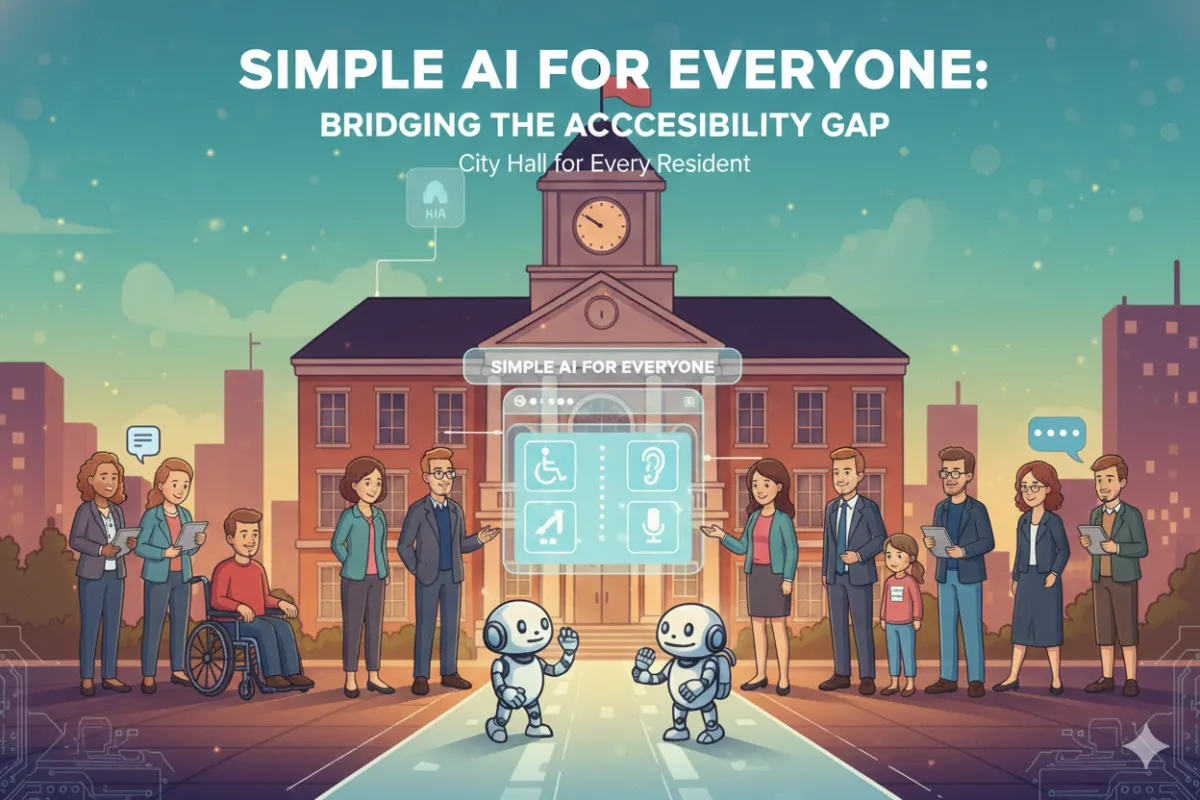
Simple AI for Everyone: Bridging the Accessibility Gap
The Simple AI Equalizer A core pillar of the University of Michigan’s AI research is the concept of "Equitable Access." For a municipality, AI is more than a cost-saver; it is a tool to ensure that every resident, regardless of the language they speak or their physical abilities, can interact with their government.
Breaking Language Barriers Traditionally, non-English speaking residents might struggle to navigate complex city permit processes or understand emergency alerts. Modern AI implementation allows for real-time, high-quality translation of city services. This ensures that "The Path" to information is open to everyone in the community simultaneously.
24/7 Availability City hall has operating hours; the internet does not. By implementing AI-driven informational tools, the municipality provides a "digital front door" that never closes. Whether a resident is a shift worker looking for trash schedules at 2:00 AM or a senior citizen needing help with a tax form, AI provides immediate, simplified guidance.
A Human-Centric Focus The goal of AI in local government is not to replace human interaction, but to remove the friction that prevents people from getting what they need. By automating the routine, city staff are freed up to handle the complex, high-touch cases that require true human empathy.
